
Why the music industry needs to learn to live with AI
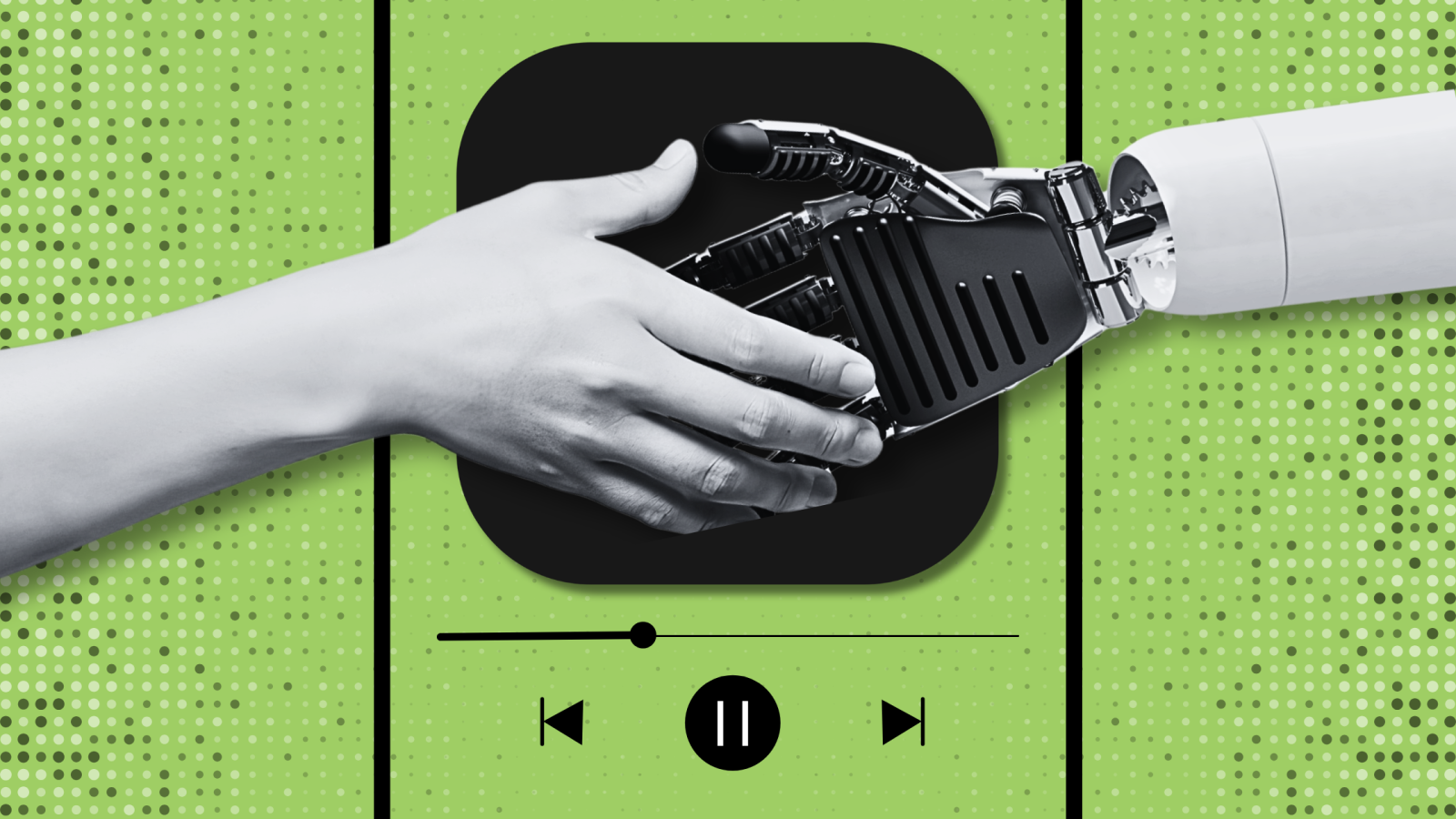
Photo: Image made with Canva Pro

29 Jan 2026
Tags
Categories
If life is a party, AI gate crashed it in 2025. With financial losses rising even more quickly than critical voices, AI will not find things quite so easy in 2026. You don’t have to look very far to find alarm bells being rung. Deutsche bank said of OpenAI’s $143 billion cumulative negative cash flow, “No startup in history has operated with losses on anything approaching this scale” (per Adweek).
Meanwhile, at the World Economic Forum, Microsoft’s Satya Nadella said that we must “do something useful” or lose “social permission” for the vast quantities of electricity it requires. So much of the financial system is vested in AI’s success that a bubble burst akin to the dot-com era is possible. However, with an MIT report claiming 95% of businesses are getting “zero return” from AI investments, something is going to have to change.
This is the state of AI at the start of 2026 – but it is not the state of music AI. Music is emerging as a case study of where AI is actually delivering (and getting better by the day). This means that everyone in the music industry needs to start thinking about how to co-exist with AI, whether they like it or not.
The impact of generative AI on music creation
The music creator economy may be the canary in the coal mine for AI’s impact on music. Leading company Native Instruments just announced that it is entering preliminary insolvency (per Music Radar). Native Instruments make beautiful software, hardware, and sounds that appeal most to established, successful music creators – creators that have spent years honing their craft. What it doesn’t do so well is cater for the emerging generation of younger creators that want to go to 0-100 in a millisecond.
This new breed of creators want making good music to be as easy as taking good photos and videos on their phones. A growing number see making music as personal entertainment rather than chasing dreams of multi-platinum success. It is a dynamic we explore in our brand new report: Music creator survey | Creation: Rise of the new breed.
AI did not create this dynamic but it did supercharge it. If music software democratised the means of production, AI has set it free. Thom York sang “anyone can play guitar” but anyone who has tried (as I have done since I was five) will tell you that you have to spend a lot of time being bad before you are good. This is the case with all instruments. Gen AI, however, takes away being-bad-to-be-good. Anyone can write a text prompt.
The result is a whole new wave of people making music – and the number paying do so is rising rapidly. In 2025, gen AI music users were already 10% of all music creators, and the number paying to create with AI doubled. Meanwhile the number of people buying traditional music software fell in both 2024 and 2025, as did revenues. This indicates that not only are new creators flowing in, established creators are shifting activity and spend to AI too.
Featured Report
MIDiA Research 2026–2033 global music publishing forecasts More than streaming
The data in this report refers to music publishing revenues, including from streaming, performance, synchronisation, mechanical, and other The market data was gleaned from multiple sources, including large public company financials, billions of dollars of long tail independent publisher revenue, country-level CMO reports, and MIDiA’s global music...
Find out more…One of the reasons is that gen AI music is improving. While licensing disputes roll on, gen AI has learned from the best chord progressions, vocal performances, arrangements, etc., that music has to offer and – crucially – what consumers do with that. The constraint on quality was always going to be computation technique, not innate capability.
Industry stakeholders can make the AI slop argument, and music critics can claim that they can identify even the best AI songs as not being made by humans. But that misses the point. AI is for the masses, both on the creation side and the consumption side.
Tracks on Suno can sound convincing enough to the average listener. AI artists like Sienna Rose command millions of Spotify listeners, while earlier this month ‘Jag vet, du är inte min’ hit the top of the Swedish charts only to be banned for being AI (per the BBC). AI is not going to replace human content, but it will increasingly displace it.
AI is here to stay in music
The music industry needs to learn not just where AI fits in it, but where it fits in AI. This requires work from the industry, such as creating ‘lanes’ for AI as we argued in our Future of music streaming report. However, it also requires artists to put in work too.
Last year, YouTube-first music creator Mary Spender laid bare the challenge:
“First it was about gigs and selling CDs, then it was streams, then it was about content, now it is something else entirely.”
Her solution? To use her YouTube channel as her ‘proof of work’, the thing that communicates the humanness of her music. As this piece from It’s Nice That lays out, this is an approach being pursued throughout the creative industries.
Gen AI music enters 2026 of the back of two years of hockey stick growth. The coming 12 months will likely be more of the same. None of this is to suggest that creators and rightsholders should simply sit back and let unlicensed activity continue unabated – those battles still need to be fought. But, just as happened with music piracy, consumer behaviour is accelerating regardless.
Some rightsholders are already leaning into AI’s capabilities – as explained by UMG’s Jon Dworkin at MusicAlly’s great Connect conference. Others are resisting with every effort they can muster. Neither approach is more right or wrong than the other. Part of carving out a role is deciding whether you want to be part of or apart from. Whatever your choice, music AI is not going away – at least not anytime soon.
Want the latest entertainment research and insights directly to your inbox? Our newsletter has you covered, click here to subscribe.
There are comments on this post join the discussion.