
The problem with the “AI versus human” music narrative
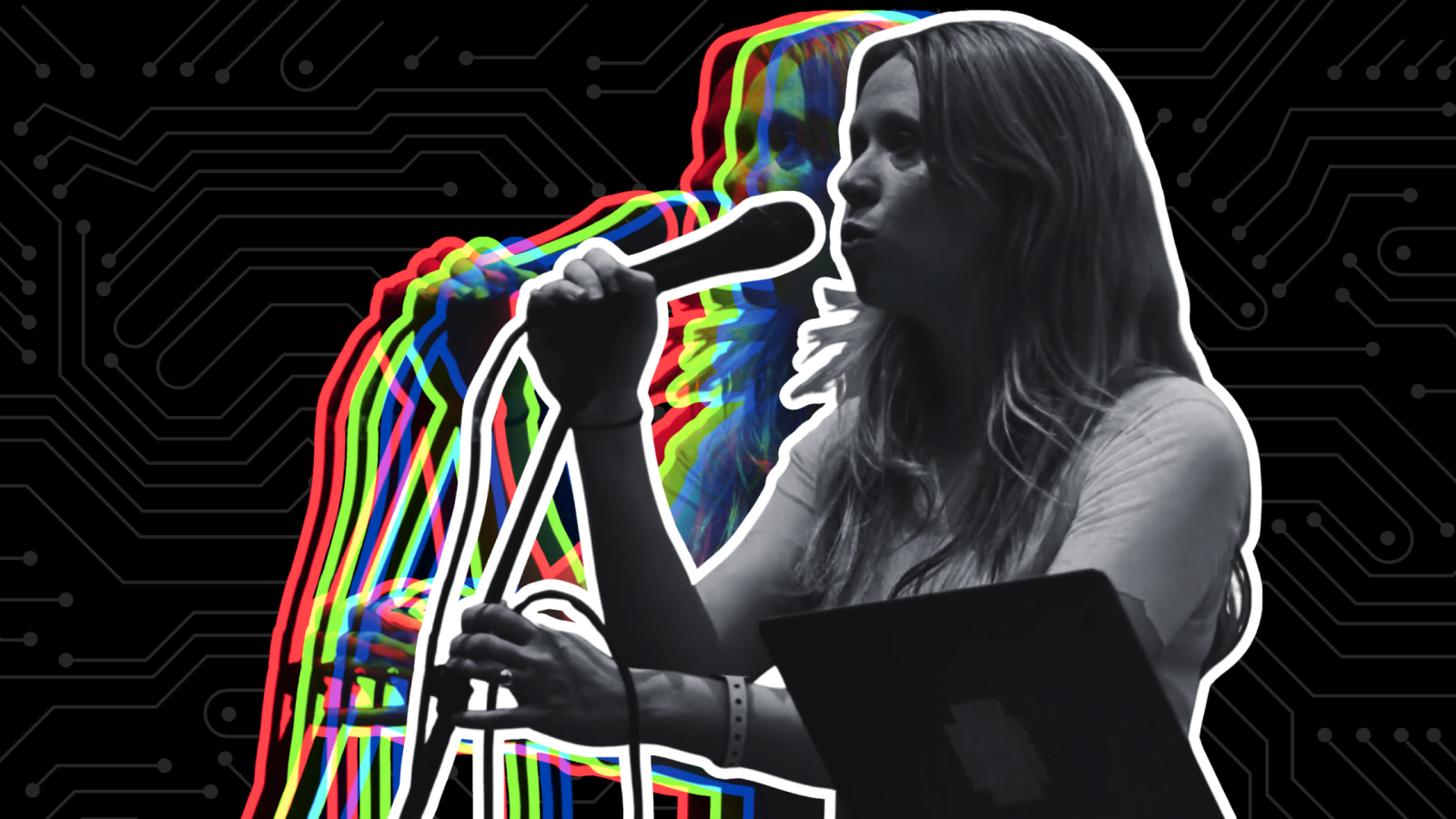
Photo: Holly Herndon via YouTube

5 Feb 2026
Categories
While attending the NAMM conference and Grammys week events over the last fortnight, AI was, of course, a dominant topic. AI-assisted gadgets shared space with traditional physical instruments at NAMM; at the Grammys, Recording Academy CEO Harvey Mason reaffirmed that “only human creators” are eligible for awards, while award winner Jon Batiste urged viewers to “protect our humanity in music right now”.
In these moments I’ve often wondered: A decade from now, what will we think about the conversations around AI that we’re having today?
Undoubtedly, there will be elements of AI’s disruption that we couldn’t have seen coming. But one future reflection strikes me as more obvious. The landscape of AI for music creation is incredibly nuanced – yet by comparison, the way we talk about it can feel black-and-white.
I sometimes call this the “AI bad, human good” approach.
For example, conversations about policing “AI-generated music” on streaming platforms often discount the fact that the lines between AI-generated, AI-assisted, and “human-created” music are blurring. Speakers at NAMM were quick to point out that solely “human-created” music is an oxymoron, as AI has been embedded in music creation software for years. Against this backdrop, initiatives like Bandcamp’s recent AI-generated music ban are well-meaning, but lack nuance and implementation strategy in ways that will ultimately cause more issues than they solve. Already there are comment sections filled with disgruntled, real-life musicians whose work has been unfairly removed from the platform by users who flagged it as suspicious.
Perhaps even more dangerous, though, is the risk of failing to recognise the many real-life, human artists who are using AI to invent entirely new forms of creative expression.
Featured Report
Splice x MIDiA Sounds of 2026 House on the rise
We zoom in on the trends and microtrends driven by the music industry’s biggest fans and most influential tastemakers: creators. Turn page after page of trends unfolding in real-time and see how Splice’s dataset is the barometer for the state of music today.
Find out more…Take Portrait XO, an audiovisual artist and researcher whose WIRE album and live performance treats AI as a collaborator. Or Arca, whose art explores the fluidity of self, and who has used machine learning to warp vocals, build performance avatars, and create music that mutates alongside its environment for the Museum of Modern Art. Or Holly Herndon, another artist and researcher who explored the concept of identity through building her own vocal instrument, Holly+. As Herndon puts it in a New Yorker profile:
“I think it’s wise to be wary… I think [AI is] going to unleash an endless hose of s***** media. That’s one hundred per cent going to happen. I just don’t think that’s the only thing that’s going to happen.”
These artists are inventing new forms of expression – and likely view their work as every bit as creative as they would a musician toiling away on a physical guitar. Of course, these AI-forward artists are at one extreme, but there is also a vast middle ground of artists, producers, and songwriters for whom AI is already now embedded as an assistive tool. Ultimately, to treat all music involving AI as destructive and unworthy of listening is to do them a direct disservice. In a way, the same initiatives that are intended to protect human artistry are sometimes neglecting the same people they aim to support.
(Interestingly, this raises new legal questions, too. In the US, AI-generated work cannot hold copyright. Yet this means that if an artist creates their own model solely trained on their own work – as Portrait XO did for WIRE – any output does not belong to that artist. If a core tenet of copyright law is to incentivise, and thus foster, creativity, this feels like a blind spot.)
Once again, a favourite 2024 essay by the writer Katherine Dee puts things into perspective. Dee argues that critics often fail to anticipate the future because they mistakenly look for signs of today’s culture in the same places where yesterday’s culture was found. Instead, she suggests that there are new forms of cultural expression and storytelling emerging that we do not fully understand yet. At the time, Dee used TikTok sketch comedies as an example. This format, which the entertainment industry did not take seriously in 2024, has recently been recognised and given a flashy new term: micro-dramas.
Artists’ and industry executives’ concerns regarding AI are entirely valid, and this disruption should prompt a reassessment of how music is categorised, surfaced, and monetised. Yet it is the underlying infrastructure that no longer works, not the art form itself. It’s critical that we leave room for the grey zone – the distinct possibility that at the crux of AI and music are entirely new creative expressions. We just might not have the name for, or understanding of, them yet.
The good news is that this realisation only further bolsters the need to invent new licensing solutions for AI – an imperative which the music industry is, by now, mostly in agreement on. Yet there’s a twist. This is not just about begrudgingly coming to the table, to avoid being on the menu. It is also about taking an offensive, proactive lead: Empowering artists to invent entirely new forms of creativity, ones we don’t have the words for yet, and to forge ahead knowing they can do so in a way that is responsible and equitable to the source material. Instead of playing constant defense, it’s about recognising that human artists and AI are often on the same team
Want the latest entertainment research and insights directly to your inbox? Our newsletter has you covered, click here to subscribe.
There is a comment on this post, add your opinion.