
From destination to departure point: Legacy IP as a gateway

24 Feb 2026
Categories
Whether it be the 1940 film, the 1995 television series, the 2005 film, or the recently announced 2026 Netflix series – each generation has its own Mr. Darcy.
While this pattern endures, the relationship between intellectual property and audience attitudes is changing. For decades, the prevailing assumption was that a new adaptation of a familiar story competed directly with its predecessors. Audiences had finite appetite, and each new version would cannibalise the last. That model is breaking down. In an always-on, multi-platform content environment, a new adaptation does not close the door on what came before. Increasingly, it opens it.
The old model: star power as the differentiator
In the pre-streaming era, IP came secondary to star power. The film adaptation was the event; the source material was the raw ingredient. What opened a film was not the story itself but the talent attached to it, and that dynamic created zero-sum competition between versions.
The cultural moment around Pride and Prejudice illustrates this well. When the 2005 film arrived, the dominant tabloid conversation was not about the enduring appeal of the source material. It was adversarial and personal: who was your Mr. Darcy – Matthew Macfadyen or Colin Firth. Audiences were asked to choose. Loyalty to one version implied scepticism about the other. The star was the product; the IP was the context. That framing positioned adaptations as rivals competing for the same emotional response.
IP as the constant, interpretations as the variable
What has changed is the audience's fundamental orientation towards story. There is now widespread appetite and interest in how a story has evolved, what each era brought to it, and what endures regardless of the telling. The IP has become the constant; the interpretations have become the variables. And the variables, it turns out, are the point.
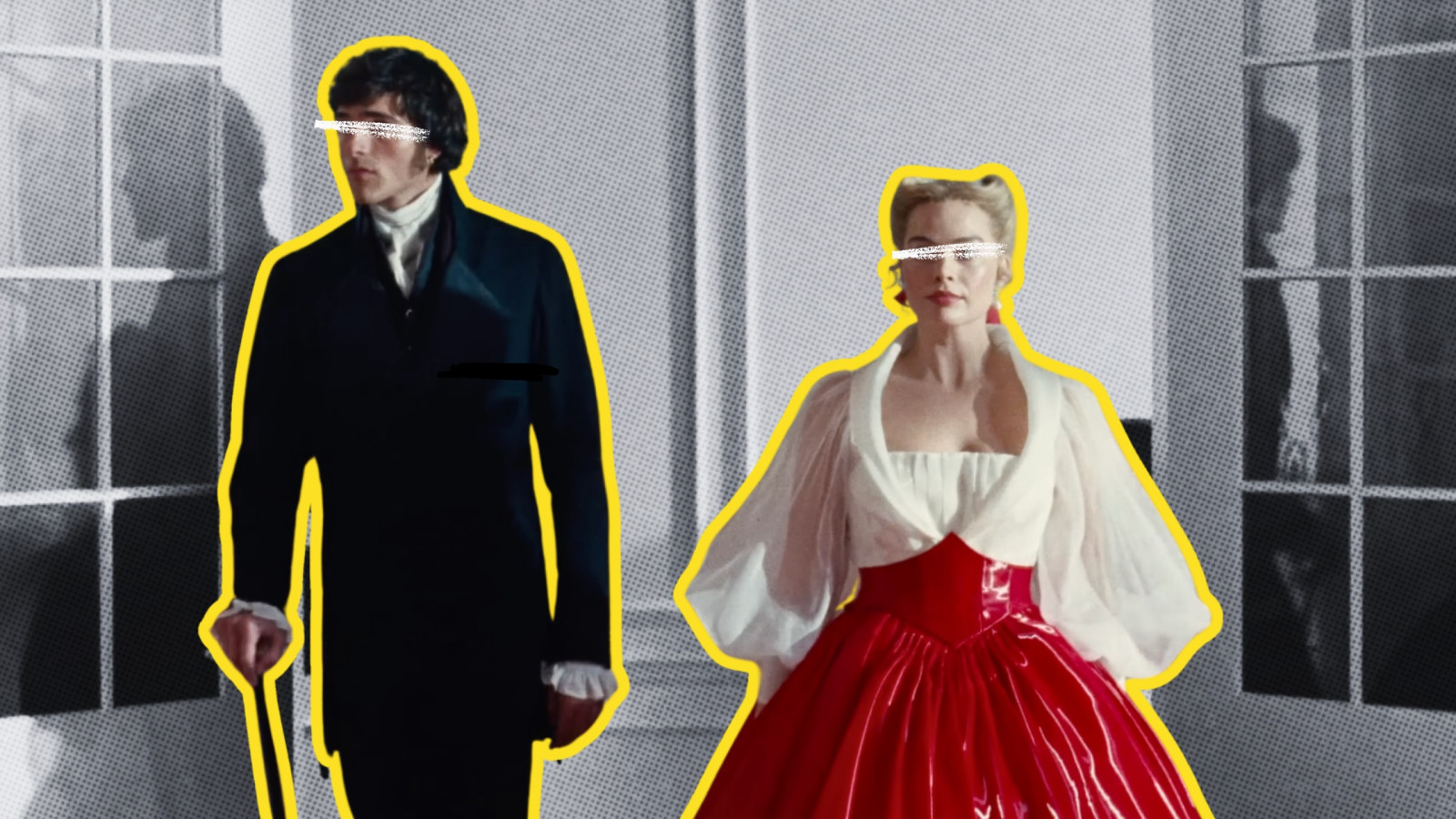
Consider the recent adaptation of Wuthering Heights. Jacob Elordi cast as Heathcliff generated cultural energy that radiated outward. Audiences did not simply anticipate the new film – they went looking. The 1939 William Wyler adaptation surfaced on Amazon Prime. The BBC television series returned on iPlayer. Emily Brontë's novel climbed reading lists. And when Goalhanger announced its new ‘Book Club’ podcast, the debut episode was on none other than Wuthering Heights, utilising the momentum of the new adaptation to springboard the show.
Featured Report
Podcasts as a key information source Implications for media companies
Podcasts have begun to rival traditional media as a key source of news and political information for podcast listeners, especially among millennials and Gen Z. To stay relevant, traditional media must innovate, while podcast companies can solidify their dominance.
Find out more…This is what transmedia expansion can do for IP. Jacob Elordi's Heathcliff does not displace Laurence Olivier's – it contextualises it, invites comparison, and gives audiences a reason to seek it out. The new version functions as a gateway to further exploration.
How platforms link past and present
In the broadcast era, audiences encountered adaptations as events. You watched the 1995 Pride and Prejudice when it aired or you missed it. Accessing the past required active effort - rentals, repurchases, retrospective programming schedules. There was friction in the system.
Streaming has smoothed that friction into near invisibility. Watch the 2005 film on Netflix and the 1995 version appears as suggested viewing. The algorithm functions as an unconscious guide, leading viewers laterally across interpretations. The past is no longer a distant archive requiring excavation. It is a recommended next step, served alongside the present.
This has altered the relationship between iterations. In the linear era, new adaptations competed with old ones for a finite pool of scheduling space and audience attention. In the algorithmic era, they collaborate. Each view of a new adaptation generates recommendations for the old. Each engagement with the old feeds data that shapes how the new is positioned. The system is circulatory rather than competitive.
The lesson for rights holders
For rights holders and content businesses, the implications are significant. The measure of a successful adaptation is no longer whether it establishes itself as the definitive version. The more valuable question is whether it functions as a gateway: whether it sends audiences deeper into the IP: back to the source text, sideways to the podcast, and down to the archive.
The most commercially and culturally durable IP is not the version that replaces everything before it. It is the version that expands the ecosystem; the one that makes audiences curious about earlier iterations and anticipatory about what might come next.
Want the latest entertainment research and insights directly to your inbox? Our newsletter has you covered, click here to subscribe.
The discussion around this post has not yet got started, be the first to add an opinion.