
Narrative audio: the case for industry investment
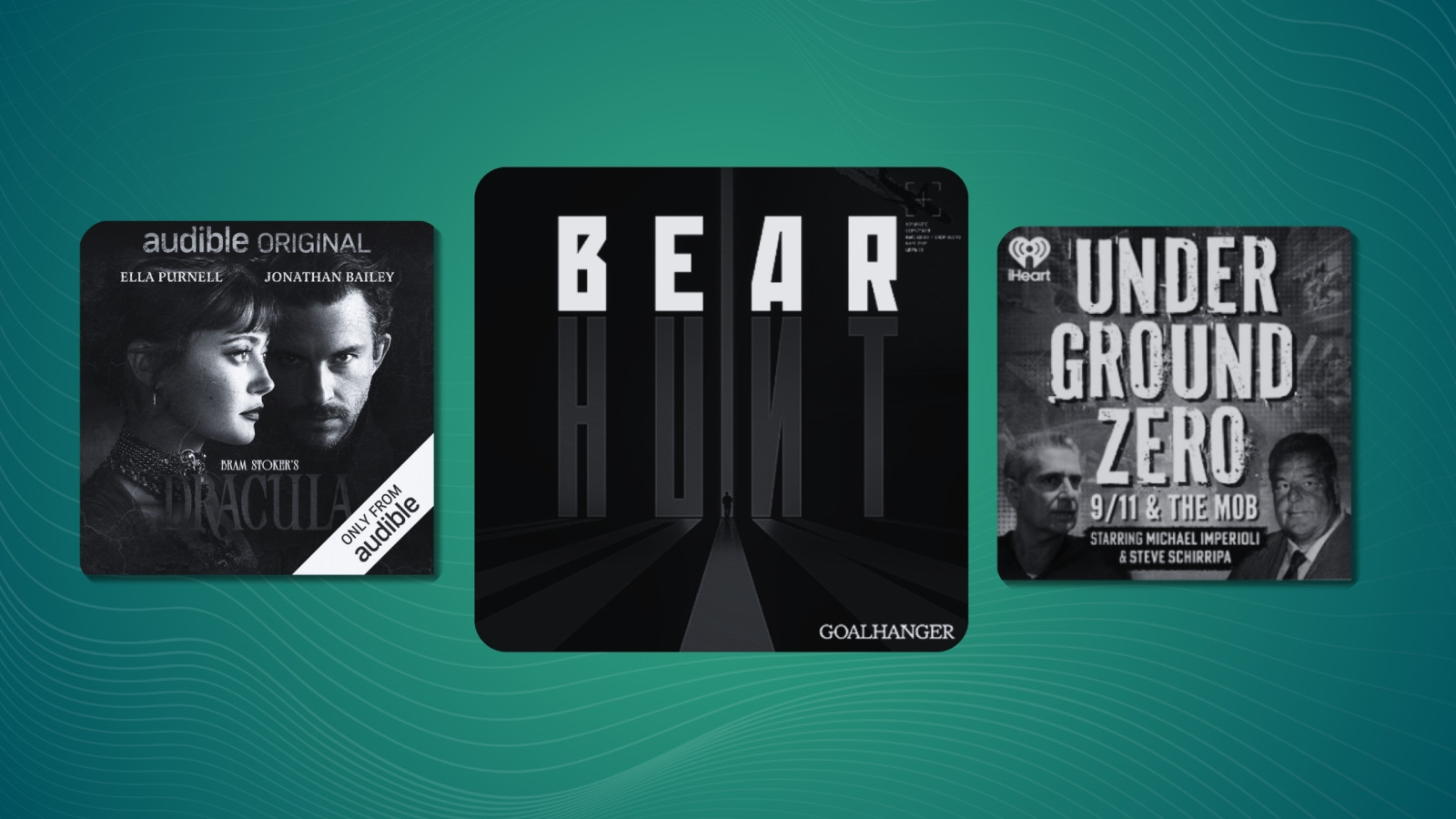
Photo: Audible / Goalhanger / Platform Media
8 Oct 2026
Categories
Narrative audio is on an upward curve. Several forces are converging to sustain it: writers and performers of real standing choosing the format, a hunger for lean-in listening, and technology that is reimagining what an audio story can sound like. Together, they make a compelling case for reinvigorated industry investment in narrative audio.
From Le Carré to Curtis: The BBC remembers its legacy
The BBC’s The Complete Smiley series, starring Simon Russell Beale, showed what radio drama looks like when a public service broadcaster commits to creative craft. Marquee talent, serious material, and real dedication turned audio drama into a destination. That is the BBC's legacy, and it’s something no streamer can easily replicate.
Richard Curtis' new audio comedy Greatest Living Writer, starring Jim Broadbent, Bill Nighy, and Meera Syal, suggests the BBC is regaining what many considered lost. Set to launch on BBC Sounds on 14 December, it's Curtis’ first sitcom since his TV work and its arrival on Radio 4 shows faith in the category on both sides.
This is a return to the BBC's strategic strengths. For the wider market, the implication is that the sector's heritage player is leading with craft rather than cost – a strong validation of the category. When the establishment invests in prestige, it signals to the entire market that the medium is moving forward.
Constraints become creative licence
Audio has no screen to fill and no visual budget to defend, so it can go places other formats cannot. Language can be harder, subject matter more daring, and authenticity can take priority over spectacle.
Goalhanger's Bear Hunt shows this. It's a geopolitical action thriller about the political manoeuvres, operational challenges, and conflict expertise involved in assassinating a head of state. The team worked with current and former military and defence professionals to shape the most accurate and daring mission conceivable (per PodNews), and the dialogue is hardened and realistic. This is audio leveraging its inherent intimacy to create authenticity that visual spectacle can sometimes undermine.
Featured Report
Audiobooks and the spoken-word experience Beyond books on tape
Audiobooks are moving from a niche format enjoyed by literary fans to a mainstream mode of spoken-word audio consumption. Major trends are not immediately visible in the data; they emerge in patterns of behaviour – what people choose, retain, and abandon.
Find out more…Another pertinent example is UnderGround Zero. From Platform Media and starring Michael Imperioli and Steve Schirripa, the show explores how the Mob made millions in the wake of 9/11 (per Deadline). Its production points the same way as Bear Hunt. Recognisable talent, whether writer or voice actor, is applying audio's intimacy to difficult stories – and audiences are following. What were previously viewed as the format's constraints are its greatest asset for telling stories that feel raw, immediate, and real.
Technology powered to turn listening live
Spatial audio is re-imagining what audio storytelling can become, both as a listening experience and within the live entertainment sphere. Both were showcased at the live listening experience of Gatsby in Harlem at Polygon Portal in London's Soho last weekend. This was Granny Eats' Wolf first venture into live, positioned as a proof of concept. Polygon is a 60-seat immersive room with an L-Acoustics system of 28 speakers mapped for 360-degree spatial audio.
The question was simple: Would people show up and enjoy sitting in a dark, cinema-like room with phones away simply to listen? The early answer is yes. A Friday night in Soho, with cocktails before the show and at the interval, turned listening into a social occasion. Few others are producing live narrative drama this way, making this a genuine first-mover space and a new revenue model, not just a novelty night out.
This technological ambition is being matched by the industry's biggest players. Dolby's sustained investment in audio is a case in point. Its collaboration with Audible on the immersive audiobook of Dracula is a masterclass in using technology to elevate narrative. By leveraging Dolby Atmos, the production creates a three-dimensional soundscape that places the listener not as an observer, but as a participant in the eerie world of the story. The technology to create deeply immersive, cinematic audio is not a future promise; it is here, setting a new standard for the premium audio experience. This is the kind of push that transforms a niche format into a mainstream, must-experience category.
Being ahead of the curve
Each of these converge to form an early signal rather than isolated experiments. Bear Hunt shows how far the genre can stretch, Greatest Living Writer is indicative of the BBC recommitting to craft, Dolby and Audible show the technological ceiling is high, and Gatsby in Harlem shows audiences will pay to listen together.
The call to the market is to act while the ground is still open. Commissioners should back distinctive, craft-led work with real creative ambition. Investors should treat narrative audio as a premium category rather than a cost-efficient one. Producers should plan for community and live from day one. The strongest positions will go to those who commit early.
Image credits: Audible / Goalhanger / Platform Media
Want the latest entertainment research and insights directly to your inbox? Our newsletter has you covered, click here to subscribe.
The discussion around this post has not yet got started, be the first to add an opinion.