
Will the next social media competitor be social at all?
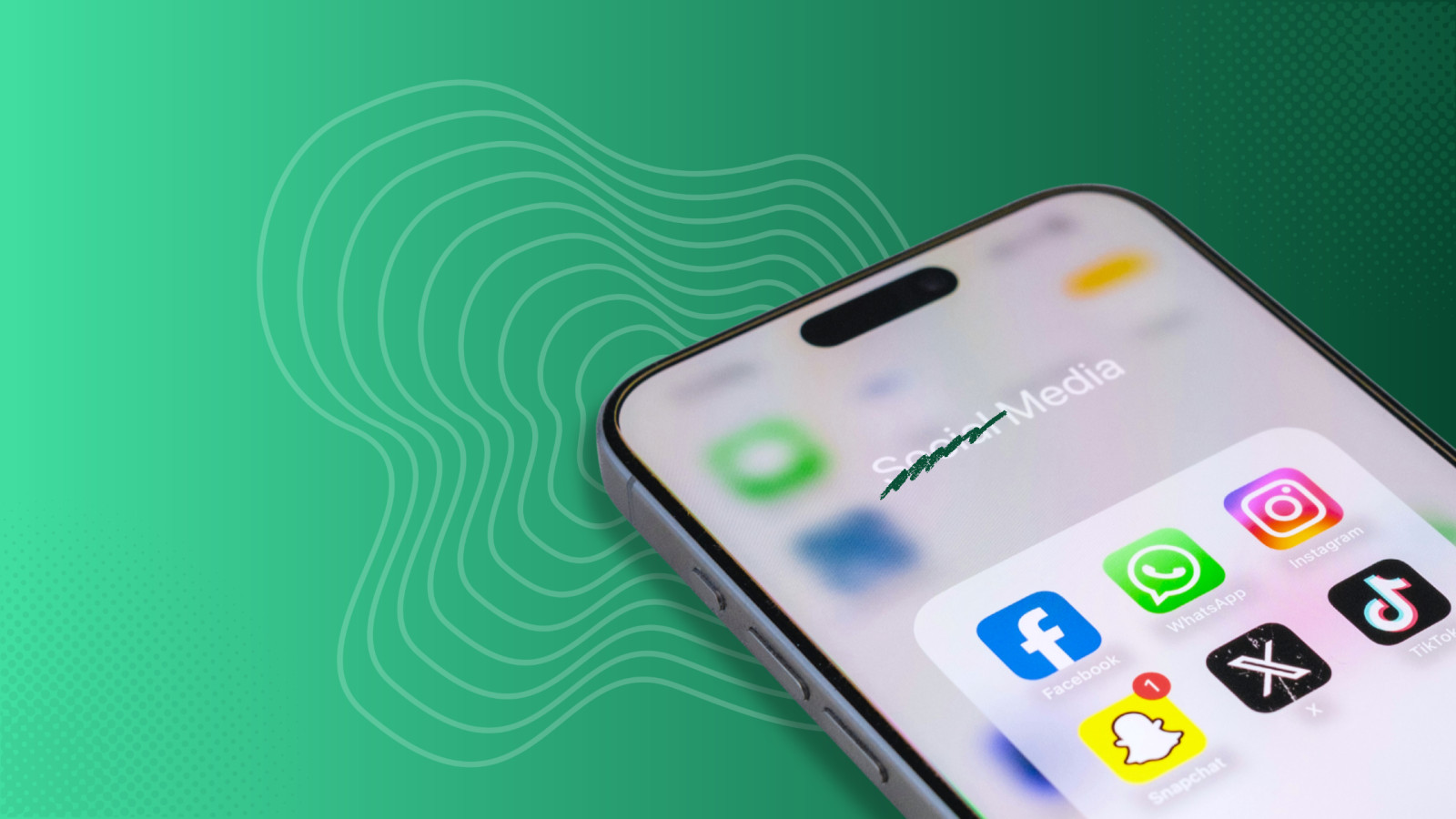
Photo: Ingmar

21 Oct 2026
Tags
Categories
With Meta in the regulatory hotseat and western “social” apps becoming increasingly entertainment-first, a natural question arises: is the opportunity ripe for a new competitor?
Few saw TikTok coming, but the short-form video app – boosted by the Covid pandemic – has reshaped the social media landscape dramatically. Now, the social marketplace is seemingly at maturity again, with a bifurcation emerging between entertainment-first platforms (e.g., YouTube and TikTok) versus peer-to-peer apps (e.g., WhatsApp and Discord). Facebook and Instagram still straddle the middle of an increasingly widening divide in how audiences engage with the platforms, with the most-cited main reason for using social media now “entertainment” over “connecting with friends” (as per MIDiA Q2 2026 consumer survey).
As ‘sticky’ content drives screentime up on social platforms, audiences are changing the way they interact with the digital world. More than three quarters of social media daily active users are actively trying – if unsuccessfully – to reduce their screentime on a monthly basis, through a combination of deleting apps, choosing more IRL activities, and setting time limits.
The emerging picture is one of disruption both from within and without, which means the environment is ripe for some kind of new competitor to arise.
What direction would disruption come from?
There is no shortage of social media propositions, new and old, each offering some combination of content, connection, and simplification. Most new entrants to Western markets go niche – such as BeReal, or the plethora of fan-first apps that dominate music tech startup competitions. However, there is an interesting new entrant aiming wide in the UK: ZYMIX.
ZYMIX launched in late September, labelling itself as the UK’s first ‘superapp’. According to its launch presentation, its initial target is UK university students (focusing especially on international students), with long-term plans to expand into Europe and the US. It offers everything from events to payment splitting, a social video feed, and games.
Featured Report
The hunt for tomorrow’s platform Are games the next generation of social?
Games environments now serve as important social hubs for younger audiences. Networks form around these shared worlds first and traditional channels second, creating communities that persist whether users are actively playing or not. Simultaneously, mainstream social platforms are becoming increasingly focused on passive entertainment, leaving a so...
Find out more…This gives it an advantage over other more niche social competitors. Targeting students means that its initial audience will be young people starting new lives with new friends, looking to socialise IRL and cut down on screentime. But can a superapp take off in a market like the UK?
The superapp supposition
Western markets are dominated by a plethora of social platforms, each competing for specific niches of content, algorithm, and audience network. Apps that seem like obvious competitors can sit side-by-side, as a combination of algorithms and audiences make the experience on each unique enough to be equally compelling. The central point for audiences is still the homescreen of their phone, rather than any specific app.
However, in other markets, specifically China, the environment looks very different. WeChat works as an entire digital operating system, offering everything from content to DMs to events to payments – a monopoly on digital behaviour that only Meta comes close to with its Facebook-WhatsApp-Instagram trifecta.
In a market like the UK with a highly fragmented social marketplace, a superapp like ZYMIX is not just competing against any individual social platform. It is competing with the phone homescreen itself, and all the propositions that sit side-by-side on it.
Will the next phase of social competition be “social”?
The problem of attention saturation is too much content, on too many platforms, taking up too much time. Another platform to put more content on does not fix that.
People want more meaningful ways to connect with themselves, creators, and each other – and that is pushing gains in unique places. More than half of girls aged 16–19 play Roblox to socialise with each other after school, according to MIDiA’s consumer survey. Analogue consumption is growing, with vinyl, CDs, and physical books on the rise. Lines stretch across blocks in New York for something as simple as German Rye bread, or in London for Eclipse glasses. London Fields’ e-bike jousting tournament is just another exhibit: people want to be part of something, and that increasingly means spontaneously putting down the convenience of a smartphone and going to stand in an endless queue or a muddy field to be around other people who are also interested in the same thing.
A superapp like ZYMIX may offer a way to seamlessly organise these real-world moments of connection. But increasingly it seems that the friction itself is part of the appeal.
The disruption social media is experiencing may not be making room for another version of a social app to emerge – but rather for something different entirely.
Want the latest entertainment research and insights directly to your inbox? Our newsletter has you covered, click here to subscribe.
The discussion around this post has not yet got started, be the first to add an opinion.