
Taste, space, and scale: working to keep humans at the centre of culture

29 Oct 2026
Categories
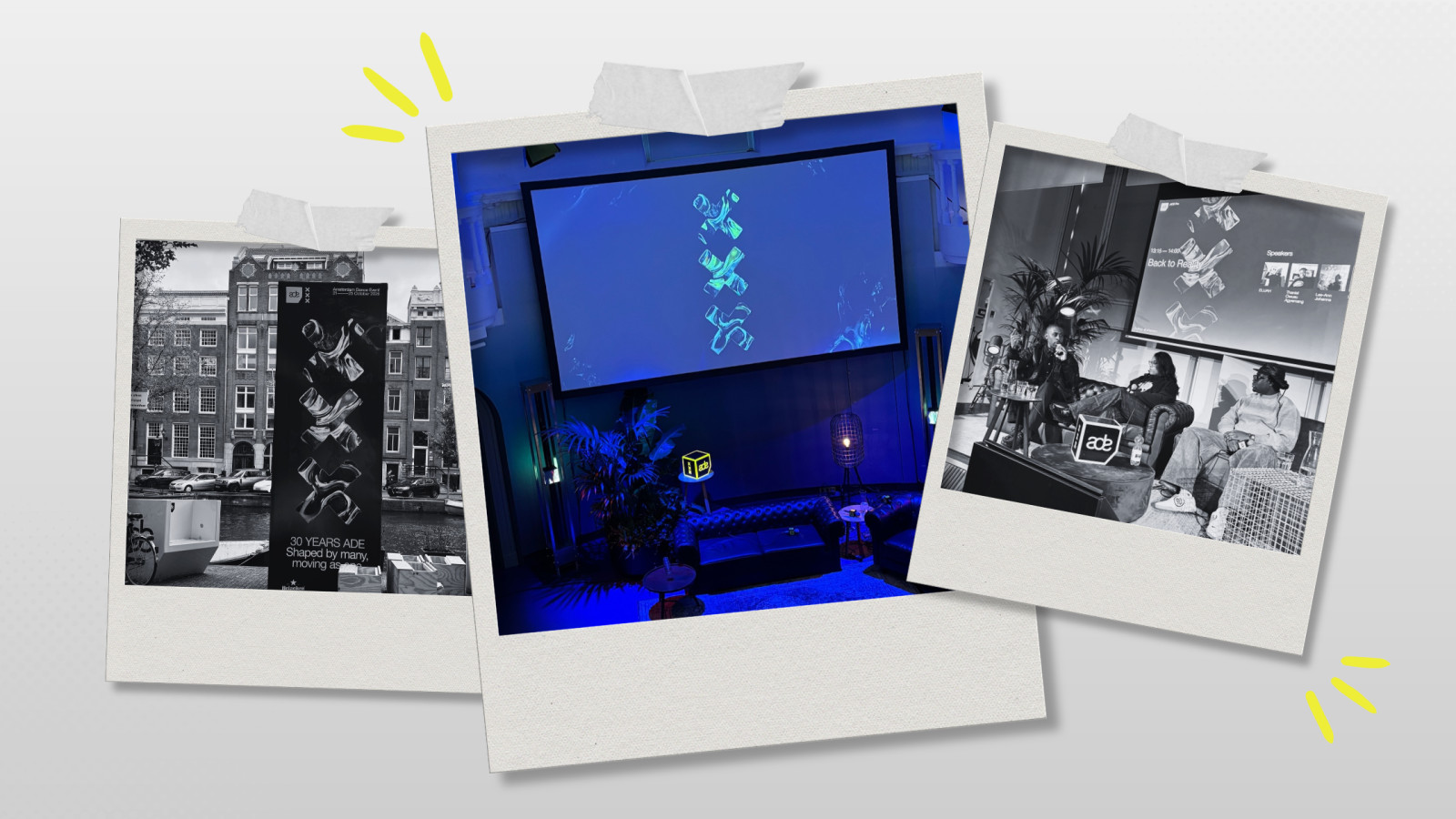
A scene needs taste, somewhere to put it, and money to keep it going. At ADE last week, the sessions I was part of kept returning to one question: how do you scale all three without losing what made them worth having?
“Beyond the Feed” with Bessie-Mae Armitage, Quentin Chambers, and Michail Stangl began from the idea that discovery is being handed to the algorithm. Human curation, the taste of another individual, is the counterweight, and it underpins the new role of radio in music discovery as well as spaces like Armitage’s Section.HQ project.
Yet taste alone isn’t enough; a scene also needs a physical space to live in.
During “Back to Reality”, the panel with ELIJAH, Dare Balogun, Lee-Ann Johanna, and Thaniel Owusu Agyemang, the case was put forward for permanent grass-roots spaces. Pop-ups and short-lease spaces generate energy, but long-term venues give artists time to grow. The case for sustainability is a case for scene development. Grassroots venues are where artists play their first gigs and make the mistakes that help them hone their craft. Without these low-stakes rooms, risk-taking disappears, and so does the new music that comes from it.
One of ELIJAH’s points was that funding exists but is largely invisible to grassroots scenes, whose ideas stay “in our heads or in our little scenes.” That’s why he partnered with UK charity Youth Music to launch and champion the NextGen Fund to tackle this issue.
Spaces that start human-curated can drift towards algorithmic, profit-driven models as they scale, but deciding to stay small isn’t a real answer when rents rise, and artists need paying. That’s the structural problem behind my argument that the Boiler Room backlash involved scapegoating. The Boiler Room community did not have a decision-making voice in the sale to private equity-backed Superstruct in January 2025, yet the entity paid the price in fan outrage.
Featured Report
From reach to resonance Radio’s new role in music discovery
In an entertainment landscape dominated by ubiquity, fragmentation, and algorithms, new generations and music superfans are craving scarcity, shared experiences, and human curation. Ironically, one of the oldest forms of music consumption has the opportunity to lead this future: radio.
Find out more…The question isn’t whether scenes should grow, but how they can grow and be funded while keeping humans at the centre.
Scaling the hard conversations: AI and data
Discovery, venues, and funding all face the same test: can they scale without losing the people at their core? The two subjects that unsettle music most face it too. AI scales creation, and data scales insight, and each risks pushing humans out of the picture if left unchecked. They are hard to discuss in public, where meanings are easily misconstrued, but the conversation still needs to happen – and ADE is well suited to hosting it. With AI, which in its widest sense threatens livelihoods, the useful question is what we can have agency over.
That is why the “AI Insider Knowledge” panel, with Todd Terry and Paul Sinclair, Chief Music Officer at AI music platform Suno, was so valuable. Terry, a legacy DJ, doesn’t necessarily “need” to use AI, but he uses it as he does any other technology: to expedite his process. At MIDiA we talk about different types of creators with different needs and aspirations, and Sinclair made the point that they can find different use cases for Suno. Hobbyists can explore creativity with it, but it alone doesn’t make a song ready for a DSP. Industry critiques often focus on whether gen AI tools can drive genuine creative endeavour. Perhaps with this in mind, Sinclair also said that reams of ChatGPT writing won’t make you an author. Terry made a similar point: “AI will not make you Quincy Jones.” It’s the same pattern as algorithmic discovery: the tool scales the output, but taste and craft stay human.
Data is the study of people
Data is another lightning rod. The music industry is a couple of decades into its data journey, going from scepticism to it being central to how music businesses operate. Now there is the start of a backlash, with concerns about everything being reduced to a data point.
At MIDiA we work to demonstrate that data is ultimately the study of people. “What Club Data Can Tell Us About the Dancefloor”, with Frank Rodi, Daniel Grootendorst and Peijin Plaiser, explored how clubs can gather and use data to improve the experience for clubbers, DJs, and venues. Done well, it means royalties are paid more accurately, DJs are paid better and, as a result, tickets are more affordable and the whole scene benefits. Like AI, data scales what a scene can do. The test is whether the people stay at the centre of it.
Keeping humans at the centre
Taste, space, money, AI, and data all face the same test: can they scale without losing the people behind them? ADE embodies what is best about electronic music, in a way where the whole city can participate. The conference is where the trickier questions get asked out loud, and where the story behind the dancefloor happens.
Want the latest entertainment research and insights directly to your inbox? Our newsletter has you covered, click here to subscribe.
The discussion around this post has not yet got started, be the first to add an opinion.