
Disney+ partners with TikTok: Can streaming stay relevant in the short-form era?
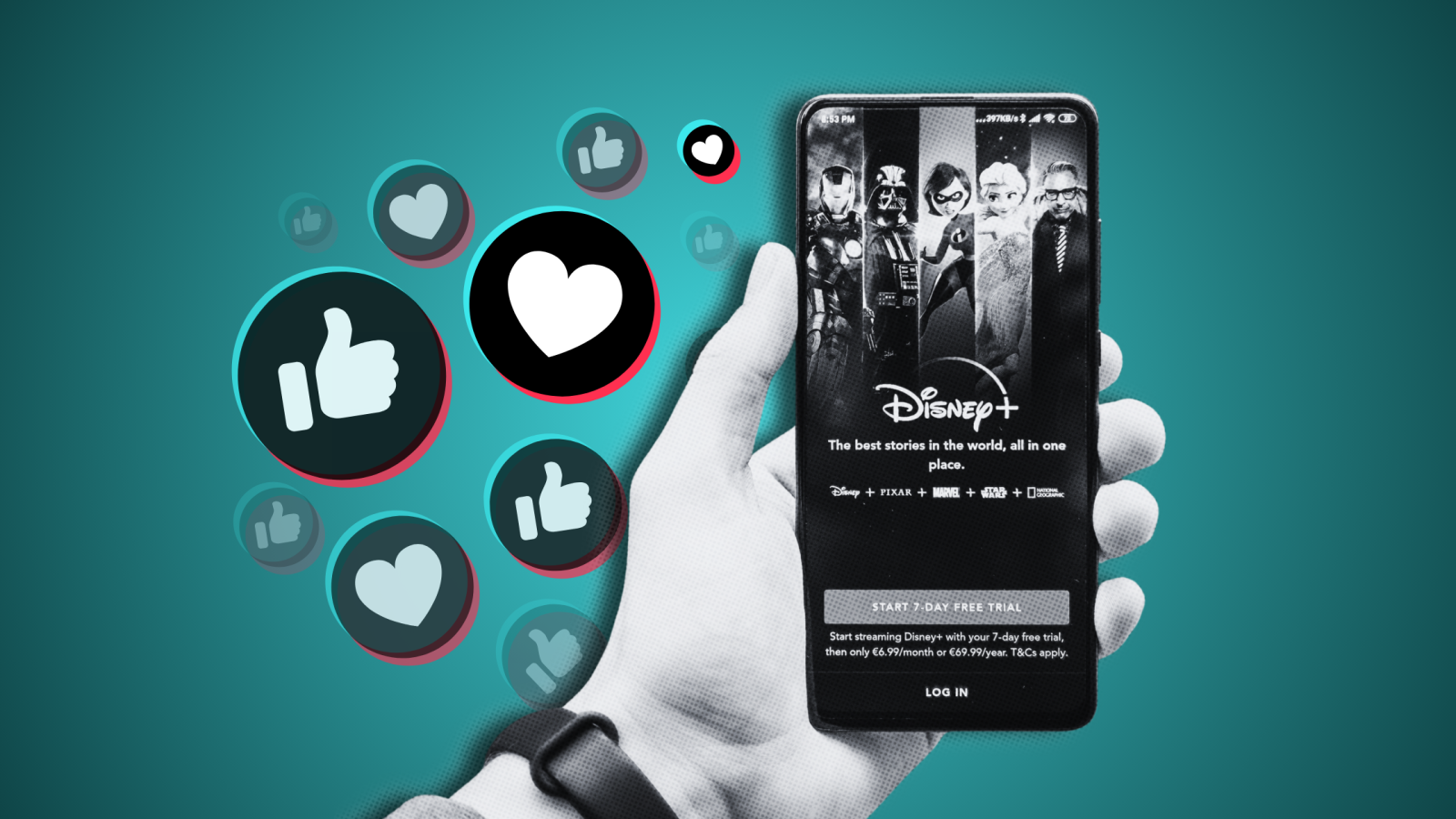
Photo: Mika Baumeister

12 Aug 2026
Categories
In a shift from its traditionally close-fisted stance to IP, Disney has announced a partnership program with TikTok that will bring creator-made, short-form content to Disney+. This comes on the heels of Disney+’s Verts feed in March 2026 and an agreement earlier in the year to license over 200 characters to OpenAI’s Sora app, before the platform was shut down.
This is a clear response to an existential problem facing traditional media – especially video streaming platforms. Short-form video on social platforms is dominating audiences’ time, at the expense of everything from films to news sites, and AI is exacerbating this challenge.
The competitive edge is two-sided
Both social media and AI have similar appeals for users that leave other forms of media at a disadvantage. They are hyper-personalised via algorithms and user-generated content to a degree that streaming platforms are not equipped to be. They are easily digestible, while longer-form media asks for deeper contemplation. They are smartphone-native, which means they are always (quite literally) to-hand and thus can physically come between an audience member and a screen slightly further away. Finally, multiple studies, including from Stanford Medicine, have shown that they are highly addictive – which is a compelling factor that cannot be easily dismissed.
However, these same advantages are also their weak spots. Hyper-personalisation makes it hard for shared cultural moments to occur, leaving audiences with a craving for connection. Easily-digestible ‘quick hits’ are just as easily forgettable and lost in the fray, making deeper emotional engagement – and therefore IP longevity – highly unlikely. With over 85% of under-35s trying to cut down on screen time (however unsuccessfully), being smartphone-native carries significant negative connotations. Addictive properties are usually addressed by regulation, as with the rise of new social media bans, lawsuits, and regulatory frameworks being laid out for AI in countries around the world.
Featured Report
Social audiences are fragmenting Social platform user profile
The social marketplace has been growing – but attention is a finite resource, as is consumer time. As a result, audience attention is fragmenting across many different apps, with the biggest – YouTube, Instagram, Facebook, and TikTok –still dominating.
Find out more…To short-form or not to short-form?
For streaming services, this leaves a difficult question. Do they play to the prevalence of AI and social media or stand firm as an alternative? A short-term engagement boost by embracing social and AI can mean a loss of long-term relevance, as IP and brand identity are subsumed by the other format-native platforms. On the other hand, refusing to adapt at all means accepting an initial loss of engagement with no guarantee of audiences returning later on.
For traditional studios, big screenings in cinemas are a way to boost mainstream cultural touchpoints, demand full attention, and earn up-front returns from ticket sales. Streaming, on the other hand, must contend with the reality that users are likely looking at their phones while a show or film plays in the background.
According to The Guardian, Netflix, for example, has allegedly started pushing writers to create dialogue that describes everything to viewers who aren’t paying attention to the screen. However, in so doing, they remove any compelling proposition for those viewers to ever look back up at it. This behaviour is not inevitable, but the strategy falls into the trap of a self-fulfilling prophecy.
Meanwhile, Disney+ is leaning on the new partnership with TikTok to incorporate short-form content into its own mobile app. This captures the behaviour, in a way designed to boost follow-through, and without ceding IP control to other platforms.
There is no one-size-fits-all solution. However, this is actually a good thing. In an environment where all entertainment has been flattened into the same short-form format, differentiation is key to not only survival, but setting and maintaining long-term cultural relevance.
Want the latest entertainment research and insights directly to your inbox? Our newsletter has you covered, click here to subscribe.
The discussion around this post has not yet got started, be the first to add an opinion.